
FOR QUALIFYING BUSINESSES
Energy Storage Incentive.
For commercial.
BC Hydro’s Energy Storage Incentive is a distinct commercial battery funding offer with pre-purchase, technical, dispatch and long-term agreement requirements.
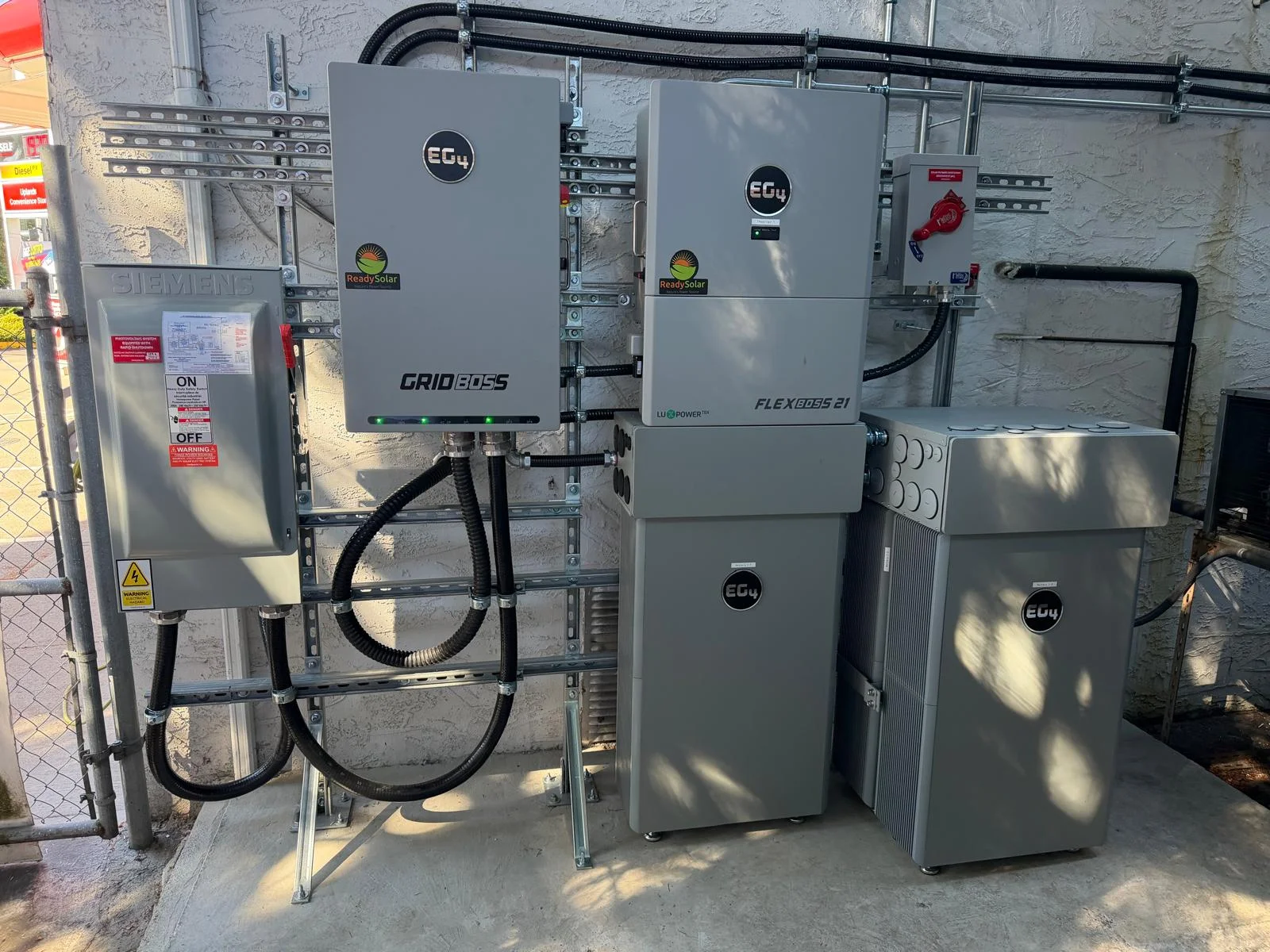
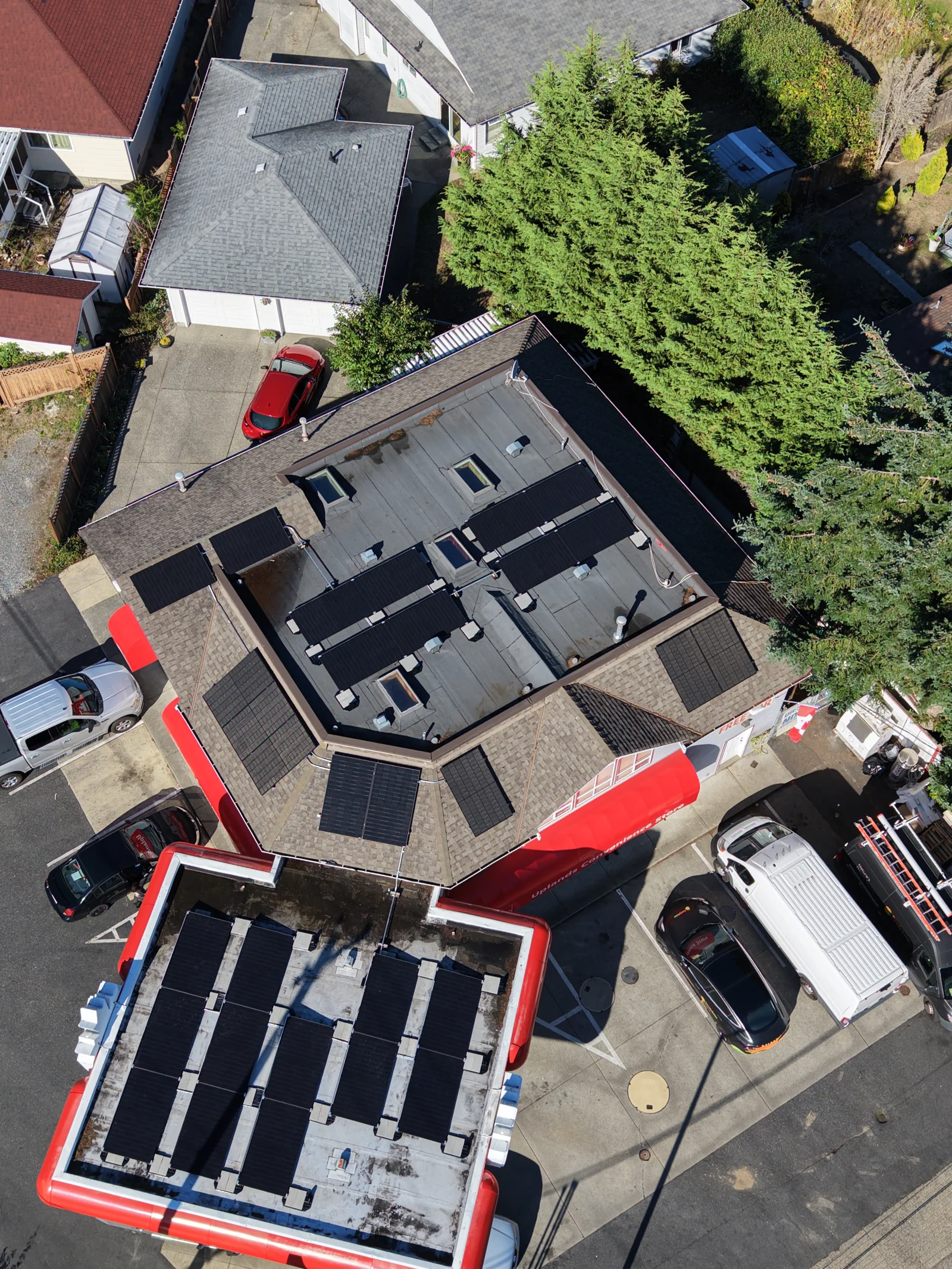
Talk about your projectEG4 equipment at Nanaimo Petro-Canada. The rooftop solar photo below shows the same Nanaimo project, with LONGi LR8 panels and 128 kWh DC battery storage.
BUILT AROUND YOU
Funding that starts with fit.
The Energy Storage Incentive is separate from seasonal business demand-response offers and from residential rebates. A qualifying new battery project must make nominated capacity available for automatic dispatch through BC Hydro’s DERMS platform under a 10-year demand-flexibility agreement.
- Review the account, operating loads and automatic-control strategy first.
- At least 25 kW of nominated capacity is required; this is not the battery’s DC nameplate rating.
- Apply and obtain the required approvals before equipment purchase or installation.
Plan for what’s next
The program is not a simple battery rebate. In exchange for potential funding, the participating business commits to automatic DERMS dispatch of nominated capacity and 10 years of demand flexibility. BC Hydro determines eligibility, approval and payment under the current agreement.
BC HYDRO ENERGY STORAGE INCENTIVE FOR COMMERCIAL · CHECKED OCTOBER 29, 2026
Up to 80% of eligible project costs.
For qualifying businesses, BC Hydro’s Energy Storage Incentive can help fund a new battery system. In return, the business agrees to make nominated battery capacity available for automated demand-flexibility events for 10 years. ESI is a capital-installation offer with an operating commitment, not the standard paired-battery rebate or the seasonal Demand Response for Business participation offer.
How the incentive is calculated
The approved incentive is the lowest of these three amounts:
- $10,000 multiplied by nominated battery power in kW.
- $10,000 multiplied by nominated battery energy in kWh, divided by four.
- 80% of eligible project costs.
Nominated capacity is the portion made available to BC Hydro, not necessarily the battery’s full nameplate rating. The 80% figure is a ceiling, not a guaranteed contribution to the full project bill. Eligible costs include battery equipment, installation and permitting; infrastructure costs are excluded.
Check the account, equipment and commitment first
- An eligible general-service or irrigation account, an operating smart meter and an eligible grid-connected site are required. Residential and transmission accounts are not eligible. The current manual excludes Self-Generation Rate 2289, Customer Generation Rate 2290 and Overnight Rates 1640–1643.
- The battery must be new and not already purchased or installed, with at least 25 kW of nominated capacity. Review and apply before buying equipment.
- The system must meet technical and connectivity requirements, operate without exporting to the grid, and respond to BC Hydro’s automated dispatch commands through its control platform, DERMS.
- The business commits to 10 years of year-round demand flexibility. Falling short of reliability requirements can lead to repayment of part of the incentive.
- Tesla products are not eligible for this offer. Backup reserve, equipment eligibility and the operating strategy need a project-specific review. A battery’s residential rebate or Peak Saver status does not determine ESI approval.
Funding follows approval and project milestones
The manual describes three milestone payments: 50% of the approved incentive on system delivery, 25% on approval to energize, and 25% on successful integration with BC Hydro’s control platform. Application approval, the agreement and current program terms govern payment.
Separate programs can have different rules
The September 2026 ESI manual allows participation in other demand-response programs when every program’s eligibility requirements are met and duplicate incentive submissions are avoided. It specifically mentions the Demand Response for Business Behavioural offer. This is not automatic approval to combine ESI with the commercial solar or paired-battery rebate. Account rates and program requirements differ.
REAL READY SOLAR WORK · NANAIMO
Commercial solar.
Storage with a purpose.
The LONGi LR8 rooftop solar and EG4 battery equipment are part of one Petro-Canada gas station project in Nanaimo, Vancouver Island.
 Nanaimo Petro-Canada
LONGi LR8 solar panels, 128 kWh DC battery storage and an EG4 FlexBOSS 21 system.
Ready Solar reports that BC Hydro paid 80% of eligible battery project costs for this installation through ESI.
This is the project contribution reported by Ready Solar, not a guaranteed result for another property. ESI uses the lowest of its nominated-power calculation, nominated-energy calculation and 80% of eligible project costs. The solar array and the entire combined project bill are not presented as 80%-funded.
Read the Nanaimo project story Explore commercial ESI requirementsKNOW BEFORE YOU GO
Good questions.
Clear answers.
Is the Energy Storage Incentive the same as business demand response?
No. It is a separate commercial battery funding offer. It requires a qualifying new system, automatic DERMS dispatch and a 10-year demand-flexibility agreement, while other business demand-response offers have their own terms.
Can other demand-response offers still be available?
The current customer manual permits participation in other demand-response programs if every offer’s requirements are met and no duplicate incentive submission is made. It specifically notes the Business Behavioural offer. Do not treat that as automatic rebate stacking.
Can I use the full battery nameplate for the minimum capacity?
The minimum is 25 kW of nominated capacity made available under the program, not the battery’s DC nameplate rating. Confirm the proposed nominated capacity and all technical requirements before purchase.
Explore your other options.
USEFUL ADVICE FOR THIS PROJECT
Look into the details.
LET’S MAKE A PLAN
Let’s plan your
solar installation.
Tell us about your property. We’ll help you understand what makes sense.