
Articles
When BC Goes Dark, Your Home Doesn't Have To
How Home Battery Backup Keeps the Lights On During BC Hydro Power Outages in Vancouver, the Lower Mainland and Vancouver Island
In early November 2026, back-to-back windstorms hit BC. BC Hydro reported more than 380,000 customer outages across the province in a single storm series, with about 135,000 customers in the dark at the peak. Surrey, Duncan, Port Hardy and Prince George were among the hardest hit.
For most homes, that meant cold rooms, a warm fridge, no internet and no idea when the power would come back. For homes with a properly designed battery backup system, it meant almost nothing changed.
BC Power Outages Are Not Going Away
BC Hydro itself now describes emergency season as year-round. Trees and vegetation remain the leading cause of storm outages in the province, and drought is weakening trees that later fall onto lines during windstorms and atmospheric rivers.
At the same time, there is growing public discussion about how much pressure BC's grid is under. Electricity demand keeps rising with heat pumps, EVs and new development, BC has imported record amounts of electricity in recent years, and grid reliability reports have flagged the risk of supply shortfalls during extreme conditions like deep freezes.
None of this means the lights are about to go out for good. It does mean outages, whether from storms, wildfires, equipment failures or grid strain, are a normal part of life in BC. The question is whether your home is ready for them.
The Solar Myth: "I Have Solar, So I Have Power"
This surprises many homeowners: solar panels on their own do not work during a power outage.
A grid-tied solar system is required to shut off when the grid goes down. This is a safety rule. It stops your panels from sending power into lines that BC Hydro crews may be repairing. So even on a bright sunny day, a solar-only home goes dark with the rest of the street.
To use your own power during an outage, you need a battery. The battery and backup equipment safely disconnect your home from the grid and turn it into its own small power system. Your solar keeps charging the battery, and the battery keeps your home running.
Three Ways to Make Your Home Outage-Proof
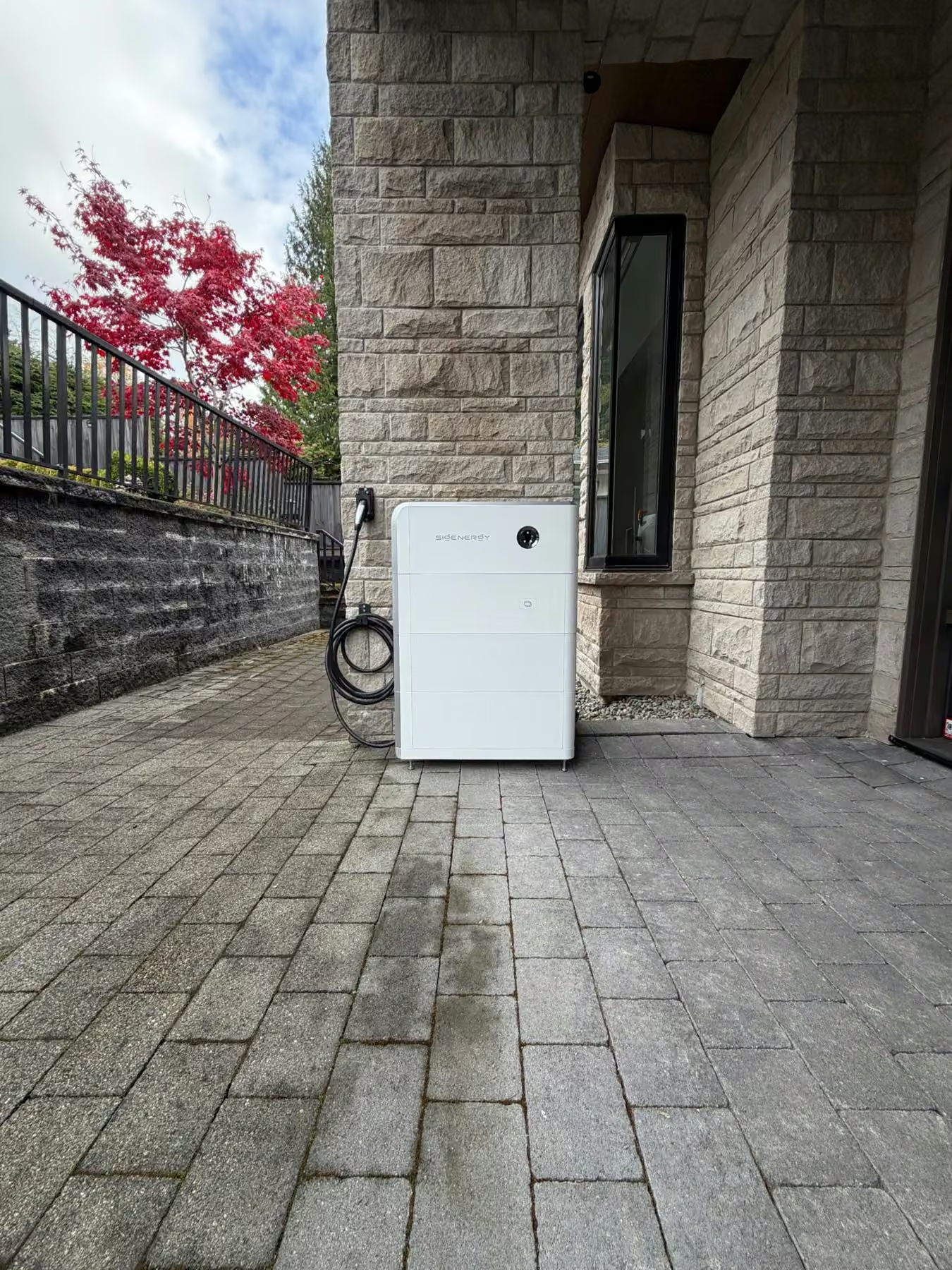
1. Solar + battery (the strongest option)
Solar recharges your battery every day the sun is out. During a long outage, you are not just running on stored energy, you are making more. This is the closest thing to true energy independence for a BC home.
2. Battery + generator (no solar needed)
No room for solar, or not ready for it yet? A battery-only system with a generator inlet still keeps your home running. When a multi-day or multi-week outage drains the battery, plug in a portable or standby generator (such as Generac or Briggs & Stratton) to recharge it. The battery then powers your home quietly, so the generator does not have to run all night.
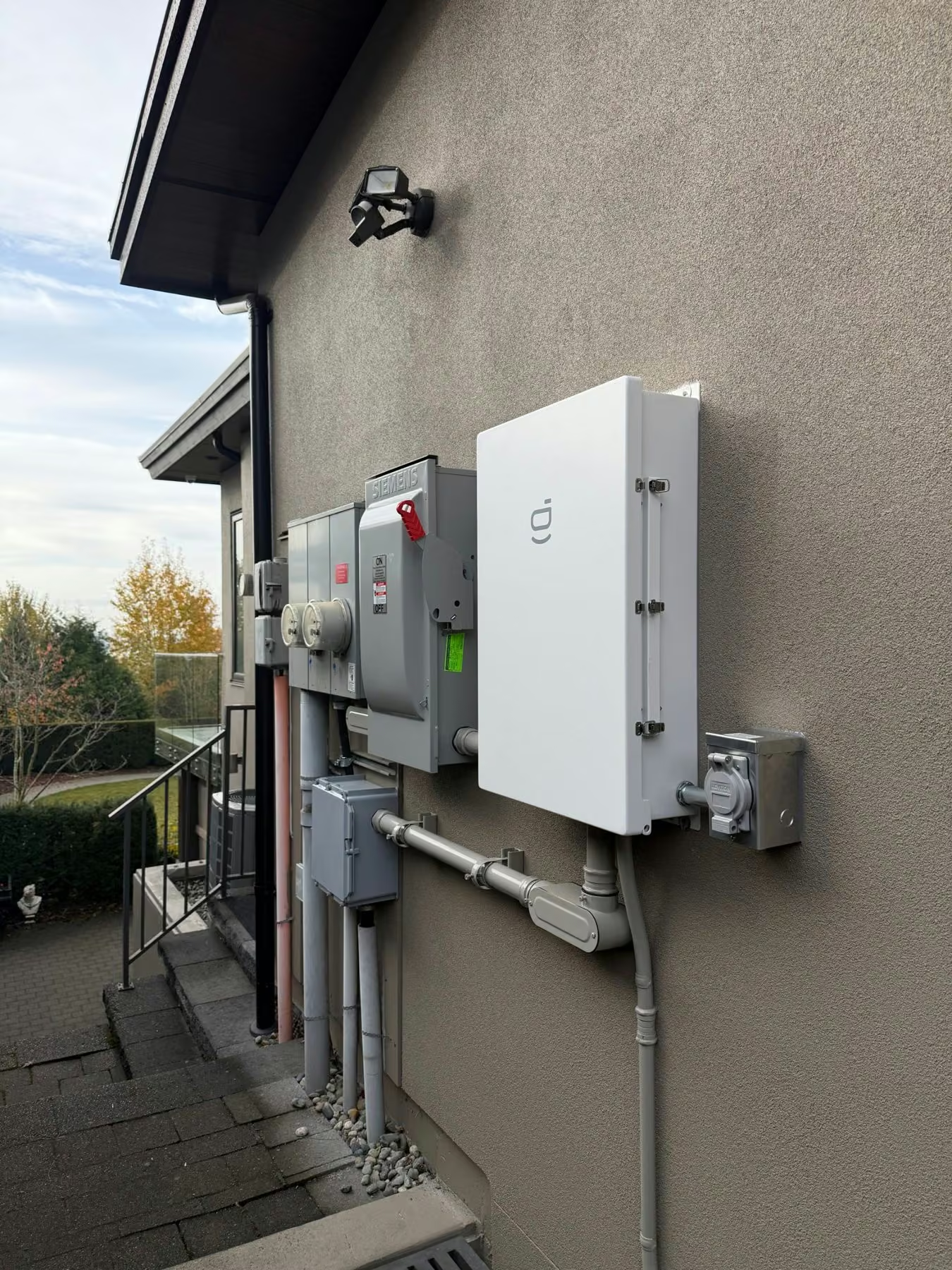
3. Solar + battery + generator (apocalypse-proof)
The ultimate setup. Solar charges the battery on sunny days, the generator backs it up during long dark stretches, and some systems can even use a compatible EV as an extra battery through bidirectional charging. Three sources of power, zero reliance on the grid when it matters most.
Whole Home Backup vs Essentials Only
Partial backup covers the essentials: fridge, lights, internet, furnace fan, sump pump and a few outlets. It costs less and stretches your battery further.
Whole home backup keeps everything running, including heat pumps, ovens, EV chargers and larger loads. With a system sized for it, that can even include saunas, steam rooms, hot tubs and home gyms, so your home routine carries on while the rest of the neighbourhood waits in the dark.
High-power loads like saunas and steam showers draw a lot of energy, so they need enough inverter output and battery capacity to run them, and they will use up stored power faster. We size every system around the loads you actually want to keep running, and we will tell you honestly how long each setup will last.
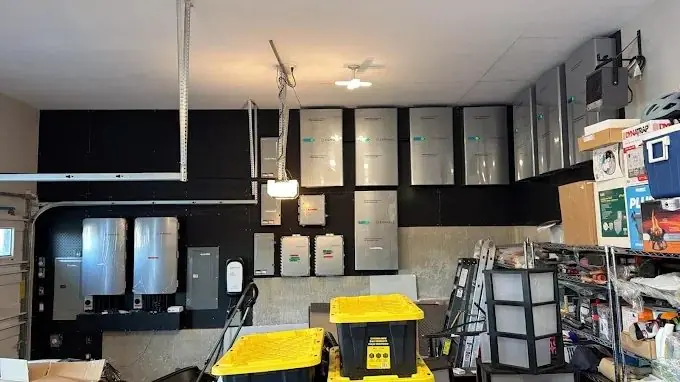
What Stays On During an Outage With Battery Backup
- Lights and outlets
- Fridge and freezer (no spoiled food)
- Internet and Wi-Fi, so you can work and stay connected
- Heat pump or furnace fan, for heat in winter and cooling in summer
- Sump pump, to protect against basement flooding during storms
- Medical equipment and home office
- EV charging (on larger systems)
- Saunas, steam rooms and hot tubs (on whole home systems sized for them)
Why Homeowners Choose Ready Solar for Backup Power
- Licensed, in-house electricians: we never subcontract installs.
- Batteries from brands we trust: Sigenergy, EG4, Tesla Powerwall, EP Cube and Enphase, with SolarEdge on request.
- Indoor or outdoor installs: outdoor-rated, weatherproof, heated systems when indoor space or safety rules do not allow a battery inside.
- Generator integration: for multi-day and multi-week outages.
- 400A home specialists: large homes with big loads are our specialty.
- Permits and BC Hydro handled: we take care of city permits, inspections, BC Hydro questions and eligible rebate applications.
- Local aftercare: a BC team that answers the phone when you need it.
Frequently Asked Questions
Does solar work during a power outage in BC?
Not on its own. Grid-tied solar shuts off during an outage for safety. You need a battery (or a battery and generator) to use power when the grid is down.
How long can a home battery run my house during an outage?
It depends on battery size and what you run. Essentials can last a day or more on a typical home battery. Solar recharges it daily, and a generator can top it up during long outages.
Can I get backup power without solar panels?
Yes. A battery-only system with a generator inlet keeps your home running during outages and can be recharged with a generator. You can add solar later.
Can a battery run my heat pump, sauna or hot tub?
Yes, if the system is designed for it. Larger loads need more inverter power and battery capacity, so we size the system around exactly what you want to keep running.
What is the best home battery for power outages in BC?
It depends on your home, your loads and where the battery can be installed. We install Sigenergy, EG4, Tesla Powerwall, EP Cube and Enphase, and we will recommend the right one for you.
Are generators safe to use with a battery system?
Yes, when connected through a proper generator inlet and transfer equipment installed by a licensed electrician. Never back-feed a generator into your home through an outlet.
Don't Wait for the Next Storm
The best time to install battery backup is before the next windstorm, not during it. Send us your recent BC Hydro bills and tell us what you want to keep running. We will design a backup system that fits your home, your budget and the way you live.
Get a Free Battery Backup Quote